How to Fix Marble Etching (Wine Rings, Water Marks, and Acid Damage)
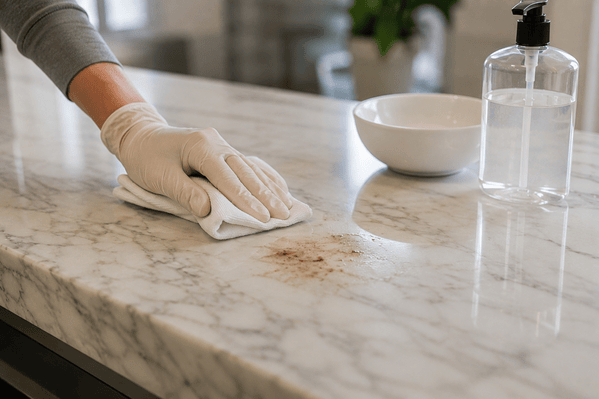
If you've ever set a glass of wine down on your marble counter and come back to find a dull, cloudy ring where the glass sat — that's not a stain. That's etching, and it's one of the most misunderstood problems marble owners deal with in Los Angeles.
The good news: etching is fixable, and in most cases it doesn't mean replacing your marble. Here's what's actually happening to your stone and how to get it looking sharp again.
Notice etching on your marble? Get a free etching repair quote from our LA team today.
Etching vs. Staining: What's the Difference?
This trips up almost every homeowner we talk to. A stain happens when a liquid soaks into the marble and discolors it — you can usually still feel a smooth surface. Etching is different: it's chemical damage. Acidic liquids like wine, coffee, citrus juice, and even some cleaning products react with the calcium carbonate in marble and actually eat into the surface, leaving a dull or cloudy spot that you can often feel with your fingertip.
That's why so many people try "cleaning" an etch mark for weeks with no results — you can't clean away damage that's already happened to the stone's surface. It has to be polished or honed out.
If you're not sure which one you're dealing with, we cover the difference between removable stains and permanent etch damage in more detail in our guide on removing stains from marble.
What Causes Marble Etching in LA Homes
Marble kitchens and bathrooms across Los Angeles run into etching constantly because of everyday things most people don't think twice about:
- Wine, citrus, and vinegar-based dressings left on countertops during meal prep
- Coffee rings from mugs set directly on marble
- Toothpaste and mouthwash splashes on bathroom vanities
- Acidic cleaning sprays (a lot of "all-purpose" cleaners are not marble-safe)
- Hard water buildup around sinks and tub surrounds, which is a bigger issue in parts of LA with harder municipal water
Can You Fix Etching Yourself?
For very light, shallow etching, marble polishing powder and a soft cloth can sometimes buff out minor dullness — but this only works on light surface etching, and it's easy to make things worse by using the wrong product or over-polishing one spot, which creates an uneven sheen that's actually more noticeable than the original mark.
Deeper etching, or etching across multiple areas of a countertop or floor, needs professional honing and polishing equipment to correct evenly. This is especially true on floors, where uneven DIY polishing creates visible patches under different lighting.
How Professional Etching Repair Works
- Assessment – We check how deep the etching goes and whether it's isolated spots or wider damage.
- Honing – For deeper etches, we lightly grind down the surface layer to remove the damage and even out the stone.
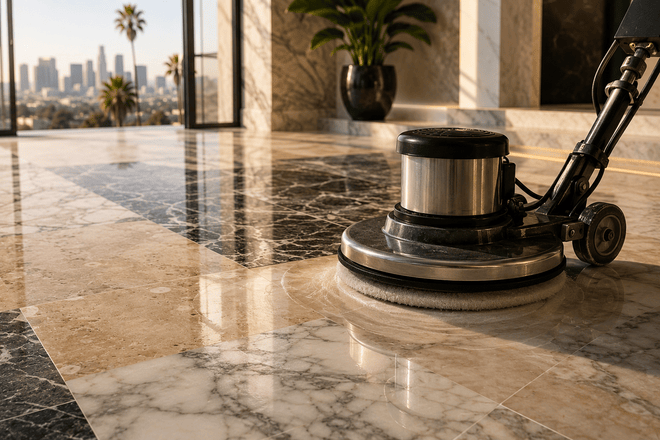
- Polishing – Diamond abrasives restore the shine and blend the repaired area seamlessly with the surrounding marble.
- Sealing – A fresh sealer coat helps protect against future etching from spills. If it's been a while since your marble was sealed, this is also a good time to check whether a full reseal makes sense — we break down timing in our marble sealing guide.
The result is a surface that matches the rest of your marble, not just a "good enough" patch job.
Preventing Future Etching
- Wipe up spills immediately, especially wine, citrus, and coffee
- Use cutting boards and coasters — always
- Switch to a pH-neutral, marble-safe cleaner (skip anything labeled "all-purpose")
- Reseal countertops on a regular schedule — we outline how often in our post on how often to polish marble floors
- Know the difference between a polished and honed finish, since honed marble hides light etching better than a high-gloss polish — more on that in our polished vs. honed breakdown
Don't wait for etch marks to spread. Schedule your free etching assessment and we'll tell you exactly what it'll take to fix it.
FAQs
Can etching be removed without replacing the marble?
Yes, in almost all cases. Etching is a surface-level issue that professional honing and polishing can correct without removing or replacing the stone.
Is etching the same as a stain?
No. Stains sit on or soak into the surface and can sometimes be cleaned. Etching is chemical damage from acidic substances that alters the stone's surface itself and requires polishing or honing to fix.
How much does marble etching repair cost?
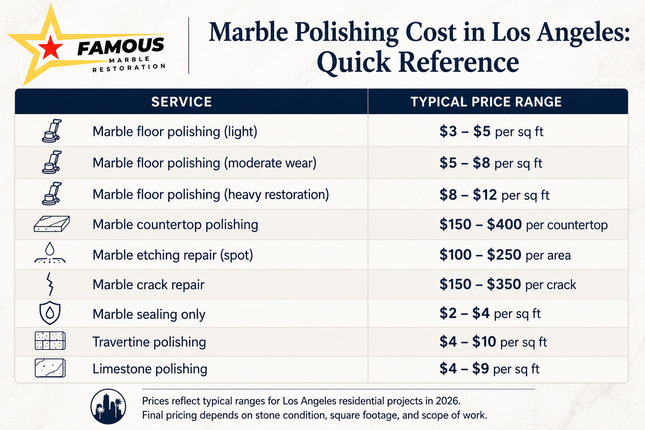
Cost depends on the size and depth of the damage, but most spot etching repairs are more affordable than people expect since it's typically a localized fix, not a full restoration. We provide free quotes based on the specific damage.
Will etching come back after it's repaired?
It can, if the same acidic spills keep happening on unsealed or unprotected marble. Sealing after repair and using marble-safe cleaners significantly reduces the chance of it recurring.
Do all marble finishes show etching the same way?
No. Polished, high-gloss marble shows etch marks more visibly than honed marble, since a matte finish naturally masks minor surface changes.
You might also like